We are closed from 18 Feb (Tue) - 20 Feb (Thu) for our annual team building. We will reopen on 21 Feb (Fri).

Finding the best dandruff treatment in Singapore starts with identifying what type of dandruff you have, because dandruff caused by a dry scalp responds to entirely different interventions than dandruff driven by excess oil and fungal overgrowth.
At TrichoLab, our dandruff protocols are developed by in-house scalp specialists and begin with a detailed scalp analysis. We treat the cause of flaking, not just the flakes.
TrichoLab’s dandruff treatments are designed to address the underlying scalp condition driving flaking, whether that is excess oil, fungal overgrowth, scalp dryness, or a combination. All treatments begin with a scalp analysis. Individual results will vary.
Scalp Exfoliating Treatment | A deep scalp exfoliation treatment designed to remove accumulated dead skin cells, excess sebum, and product buildup from the scalp surface, addressing the physical manifestation of dandruff while preparing the scalp for further treatment. |
Scalp Revival Treatment | A targeted scalp renewal protocol designed to address active dandruff and restore scalp balance. Incorporates antifungal and scalp-calming actives to help reduce flaking, itching, and scalp inflammation. |
Dandruff Prevention Treatment | A maintenance-focused treatment for those who have addressed their active dandruff and wish to prevent recurrence. Supports a balanced scalp environment to help reduce the frequency and severity of future flares. |
Book a consultation, and our scalp specialists will assess your scalp condition and identify the type of dandruff you have before recommending any treatment.

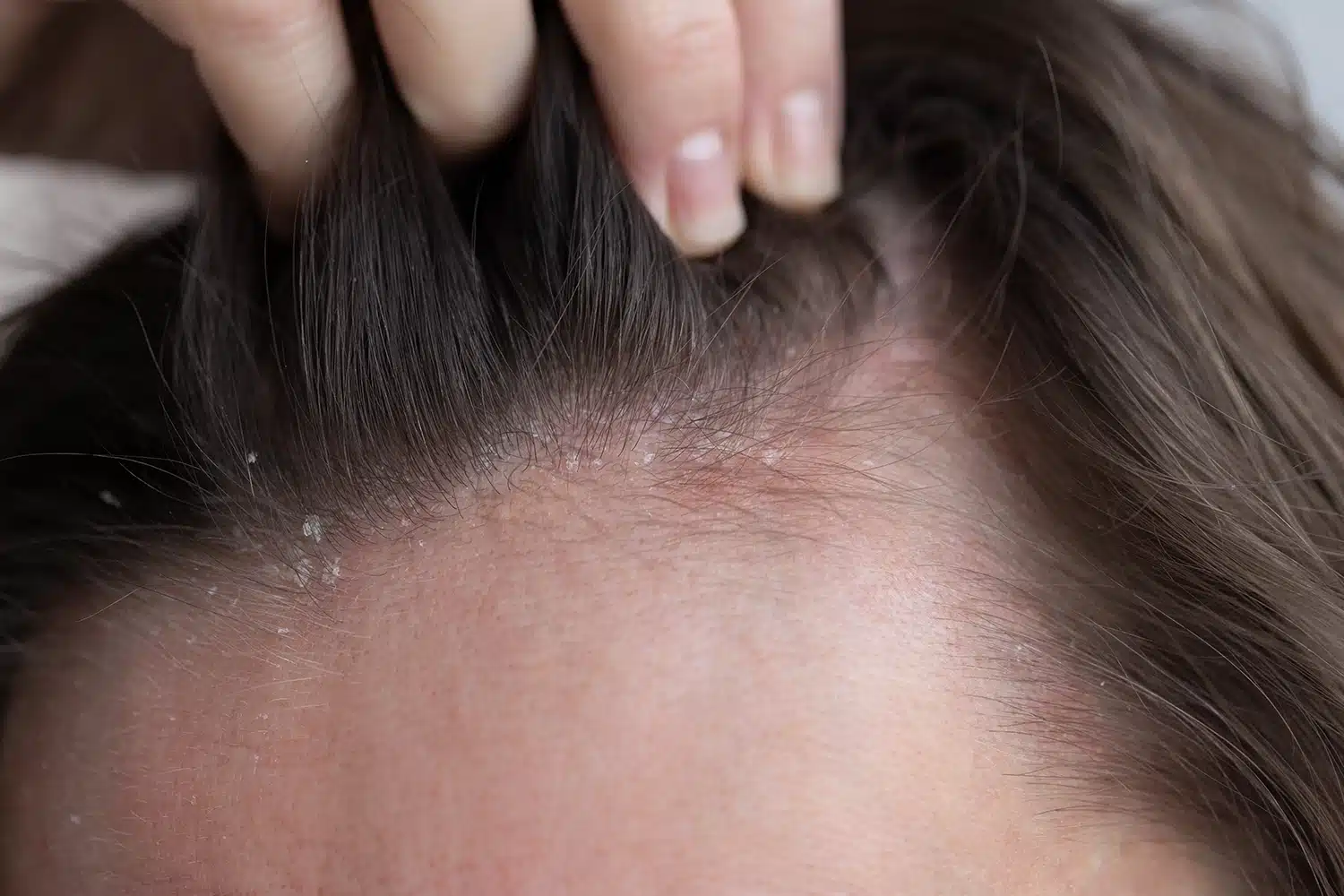
Small, fine, white flakes that fall easily from the hair and scalp. Associated with a dry, tight, or itchy scalp. Often worsened by cold, dry air or air conditioning. The scalp is flaky due to insufficient moisture and rapid cell turnover.

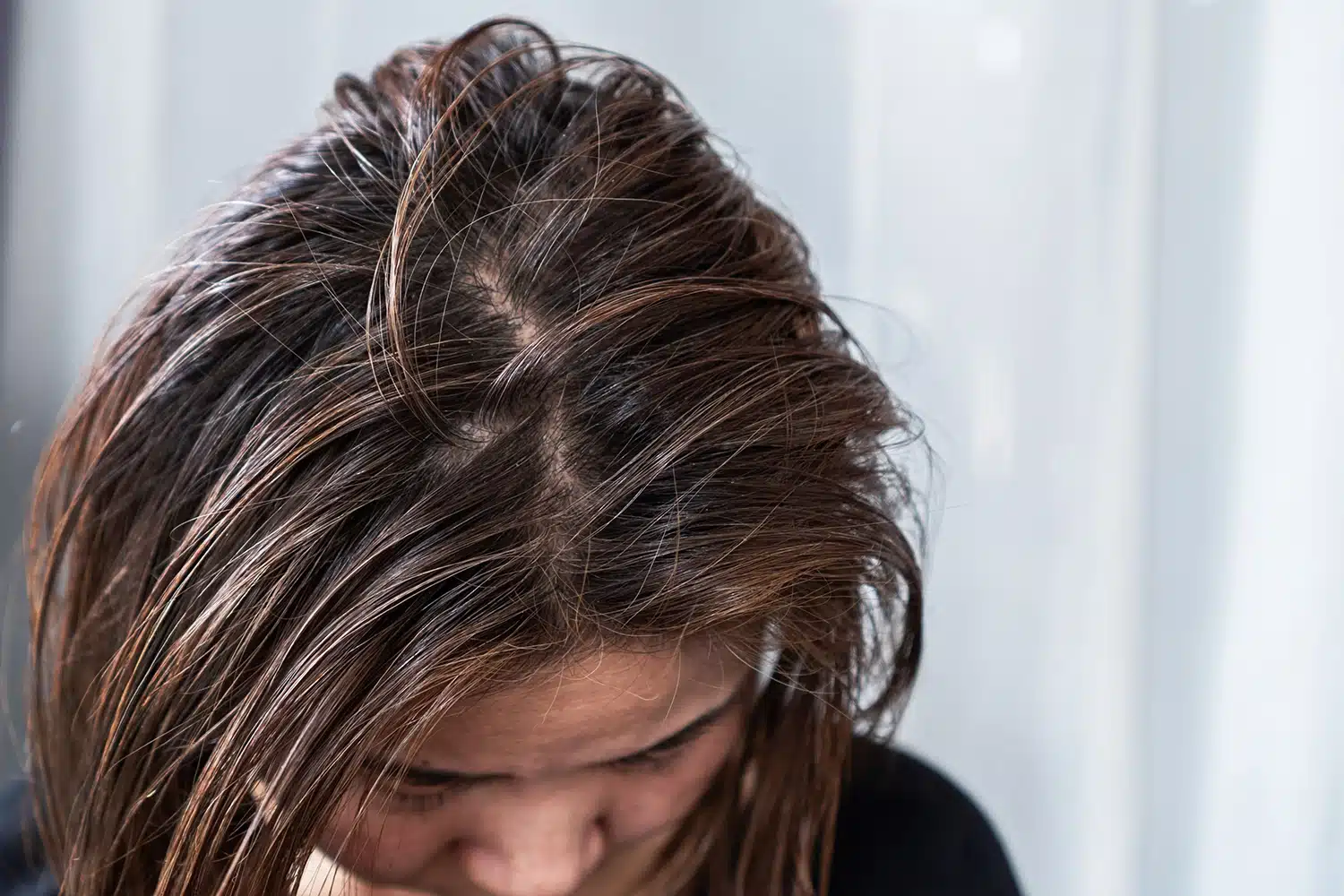
Larger, yellowish, oily flakes that tend to stick to the scalp and hair rather than fall freely. Associated with an oily scalp and the overgrowth of Malassezia yeast, which feeds on sebum. Often accompanied by redness, scalp itching, and a greasy scalp appearance.
Dandruff has several associated contributing factors:
Use a shampoo formulated for your dandruff type: antifungal shampoos for oily dandruff; hydrating, gentle formulas for dry dandruff. Ask your specialist for a recommendation.
Wash your hair regularly but not excessively. Infrequent washing allows buildup to accumulate; over-washing can strip the scalp and trigger compensatory oil production.
Manage stress where possible. Stress is one of the most common triggers for dandruff flares.
Avoid scratching the scalp, which worsens inflammation and can introduce bacteria.
Follow your specialist's home care protocol. TrichoLab's treatment plans include home solutions to support in-clinic work between sessions.
The most appropriate treatment depends on whether you have dry or oily dandruff. For oily dandruff and seborrheic dermatitis, the Scalp Revival Treatment, with its antifungal and scalp-calming actives, is typically the most targeted approach. For those looking to prevent recurrence, the Dandruff Prevention Treatment supports long-term scalp balance. A scalp analysis at consultation will identify which type you have and determine the right protocol.
Oily hair dandruff is typically seborrheic dermatitis,driven by Malassezia yeast proliferating in excess sebum. The most effective approach addresses both the sebum overproduction and the fungal overgrowth simultaneously. TrichoLab’s Scalp Revival Treatment incorporates antifungal actives to target Malassezia directly, while the Salicylic Acids Peel addresses the excess sebum and buildup that feed it. Between sessions, TrichoLab’s Anti-Dandruff Shampoo, formulated with zinc pyrithione and peppermint to inhibit fungal growth and reduce flaking, can help maintain progress. A scalp analysis will determine the right in-clinic and homecare combination for your condition.
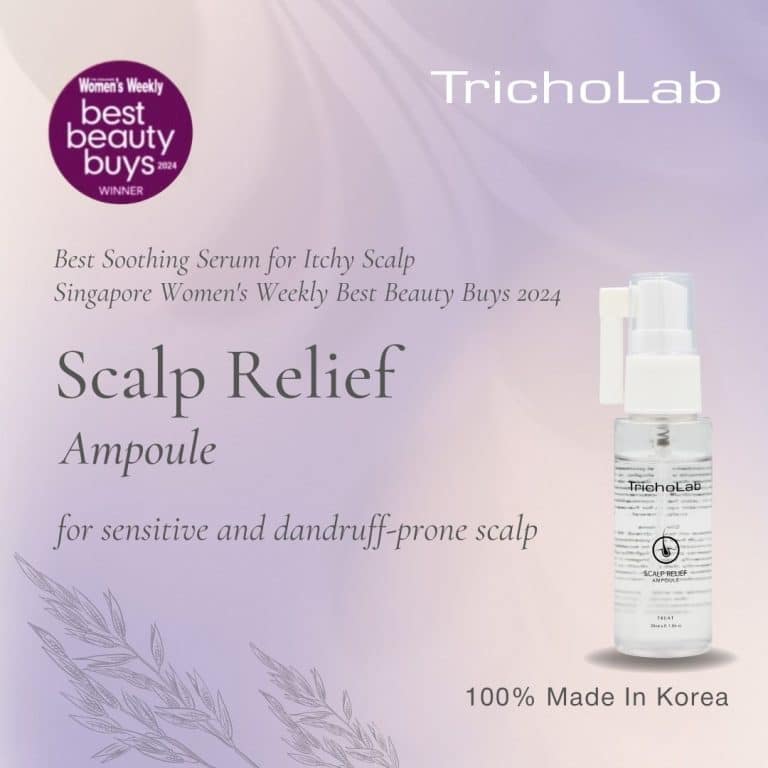
For mild, non-inflammatory scalp flaking, natural approaches can be a helpful first step. TrichoLab’s Scalp Relief Ampoule uses oat protein extract and salicylic acid to gently remove dead skin cells, soothe the scalp, and help prevent dandruff formation, a natural yet clinically grounded homecare option. Tea tree oil (diluted) and aloe vera can also provide supplementary relief. These approaches are best suited to mild, intermittent flaking rather than persistent or oily dandruff, which requires clinical attention.
No. Dandruff is not contagious. It is a condition of the scalp driven by individual factors, including sebum production, fungal activity, and scalp sensitivity, not by contact with another person.
Dandruff tends to recur because the underlying scalp conditions that drive it, sebum production, Malassezia activity, and scalp cell turnover rate, are ongoing rather than one-time events. Anti-dandruff shampoos can manage symptoms but do not resolve the underlying condition. Consistent in-clinic treatment combined with appropriate home care gives the best long-term results.
Seborrheic dermatitis is the clinical term for a more severe form of dandruff characterised by oily, yellowish flaking, redness, and scalp inflammation. It is driven by the same Malassezia overgrowth as oily dandruff but involves a more pronounced inflammatory response. TrichoLab’s Dermatitis Care treatment is available for those with confirmed seborrheic dermatitis.
Dandruff itself does not directly cause permanent hair loss, but the scalp inflammation and scratching associated with persistent dandruff can weaken hair at the root and contribute to increased shedding. Addressing dandruff is an important part of maintaining a healthy scalp environment for hair growth.