Summary:
- Dry scalp is a moisture deficit issue triggered by environmental factors, harsh products or over-washing, producing small, fine, powdery flakes and a tight, parched feeling on the scalp.
- Dandruff is driven by Malassezia yeast overgrowth on an oilier scalp, producing larger, sometimes yellow-tinged flakes with persistent itching and underlying inflammation.
- The two conditions have distinct triggers, flake characteristics and treatment needs, treating one as the other is a common reason scalp issues persist.
- Dry scalp responds to moisture restoration and gentle cleansing; dandruff requires antifungal and sebum control strategies.
Dry scalp and dandruff are two of the most commonly confused scalp conditions, and understandably so. Both cause flaking, both can be itchy, and both tend to show up on your shoulders at the worst possible time. But they have different causes, different characteristics and require different treatment approaches. Treating one as if it were the other is one of the more common reasons our scalp issues don’t seem to go away.
In this article, we’ll look into the key differences between a dry scalp and dandruff, and effective solutions for both conditions.
1. The Root Cause
Dry scalp occurs when the scalp does not produce enough oil to stay adequately moisturised, similar to how dry skin develops elsewhere on the body. It is often linked to cold or dry weather, frequent washing, harsh shampoos or simply a naturally low level of sebum production.
Dandruff, on the other hand, is not a moisture problem. It is driven by the overgrowth of Malassezia, a yeast that naturally lives on the scalp. When it proliferates beyond normal levels, it breaks down scalp oils into oleic acid, a byproduct that irritates the scalp in individuals with a sensitivity to it, triggering accelerated skin cell shedding and visible flaking. This means that an oilier scalp, not a drier one, tends to give Malassezia more to feed on.
2. The Appearance of Flakes
Although both scalp conditions cause flaking, the appearance of the flakes can be quite distinct. Looking at their size, colour and texture can help point you in the right direction.
Flake Size and Texture
Dry scalp tends to produce smaller, finer flakes that feel dry and powdery to the touch. Dandruff flakes are typically larger and may have a slightly waxy or greasy texture, particularly in cases where sebum production is high.
Flake Colour
Dry scalp flakes are usually white or light grey and tend to look relatively uniform. Dandruff flakes can appear more yellow-tinged or off-white, especially when associated with an oily scalp or seborrhoeic dermatitis.
Adherence to Hair and Scalp
Dry scalp flakes tend to fall away from the scalp and hair fairly easily. Dandruff flakes, particularly the oilier variety, may stick to the hair shaft or clump together on the scalp surface before shedding.
3. How the Scalp Feels
With dry scalp, the most noticeable sensation is tightness: a feeling of the skin being stretched or parched, especially after washing. Itchiness is also common, but tends to feel surface-level.
Dandruff-related itching often feels more persistent and deeper, accompanied by a sense of irritation or inflammation rather than simple dryness. In more severe cases, the scalp may feel tender or sensitive to touch, which is caused by the underlying inflammatory response triggered by Malassezia activity.
4. Common Triggers
Dry scalp is most commonly aggravated by environmental and habitual factors, such as:
- Cold or low-humidity weather
- Over-washing hair
- Hot showers
- Harsh, sulphate-heavy shampoos
- Chemical hair treatments
Dandruff tends to flare in response to a different set of triggers, which can include:
- Increased cortisol from stress
- Hormonal imbalances
- Dietary changes
- Poor sleep
- Seasonal humidity
- Under-washing hair
5. Where It Appears
Dry scalp tends to affect the scalp relatively evenly and may also present alongside dry skin elsewhere on the body, like on the face, arms or legs.
Generally, for dandruff, the scalp is the primary site, but flaking can also appear along the hairline, eyebrows, sides of the nose and behind the ears. These are areas where the sebaceous glands are particularly active. If flaking is showing up in these locations alongside the scalp, dandruff or seborrhoeic dermatitis is the more likely cause.
6. Response to Washing
This is one of the more useful practical tests to help determine the difference. Dry scalp often improves temporarily after washing, particularly if a gentle or moisturising shampoo is used because the added hydration provides short-term relief.
Dandruff, by contrast, tends to worsen with under-washing and may not improve significantly with a standard shampoo. It generally responds better to medicated anti-dandruff formulations containing antifungal or keratolytic agents.
7. Treatment Approach
Because dry scalp and dandruff have different root causes, they require different solutions. What works for one can actively work against the other.
Moisture Restoration
For dry scalp, the priority is to deeply hydrate and repair the skin barrier so it can retain moisture. You can:
- Switch to a gentler, sulphate-free shampoo
- Reduce washing frequency
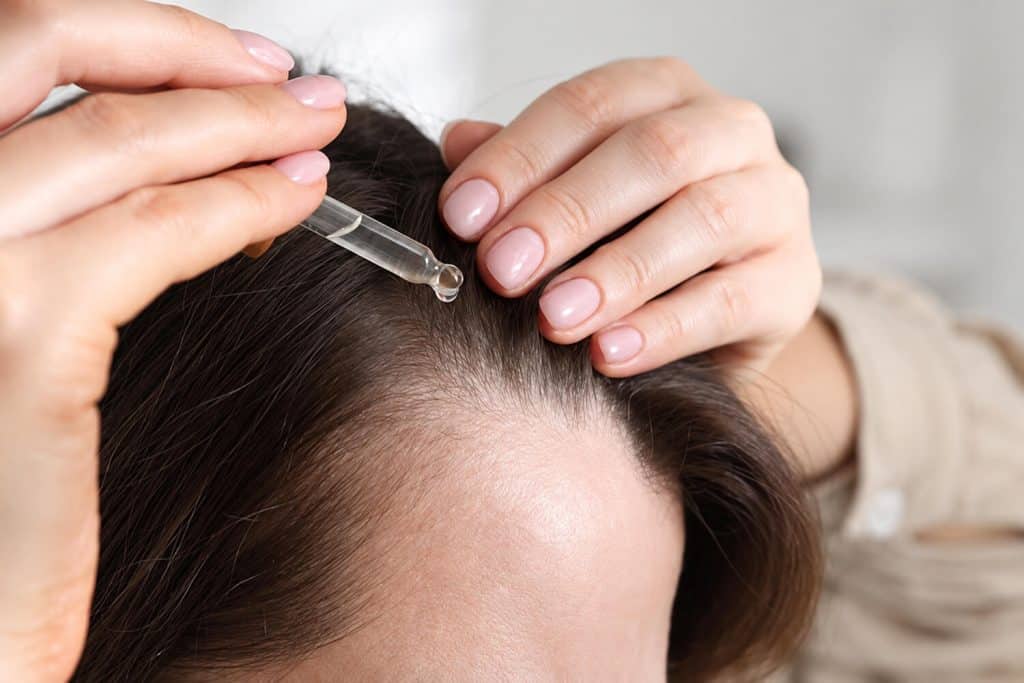
- Incorporate a scalp-specific moisturising treatment to your haircare routine
- Look out for ingredients like oat protein, hyaluronic acid and panthenol, which help restore the scalp’s moisture barrier without clogging follicles
TrichoLab’s Sensitive Reduction Treatment is designed in Singapore specially for dry and sensitive scalps. Formulated with niacinamide, vitamin B5, oat protein and green tea extracts, it works to calm inflammation, soothe irritation and strengthen the scalp’s immune function, addressing both the discomfort and the underlying sensitivity driving it.
Antifungal and Sebum Control Strategies
For dandruff, you will need a fundamentally different approach. The goal is to reduce Malassezia activity and bring sebum levels under control. You can use medicated shampoos with antifungal ingredients such as zinc pyrithione, ketoconazole or selenium sulphide. For oilier scalps, opt for a treatment protocol that regulates sebum production alongside antifungal action tends to be more effective than addressing either problem in isolation.
TrichoLab’s Dandruff Prevention Treatment combines exfoliation with active sebum regulation and antifungal care. Papaya enzymes lift away existing flaking, centella asiatica and green tea extracts work to rebalance oil levels, and peppermint extract calms scalp inflammation.
Maintenance and Recurrence
It’s important to note that neither condition is a one-and-done fix. Dry scalp tends to recur when triggers return: a change in season, a new shampoo or a period of stress.
Dandruff is a chronic condition for many people, meaning management rather than cure is the more realistic goal. Consistent use of the right products, periodic professional treatments and an understanding of your personal triggers all play a role in keeping your symptoms under control long-term.
For sensitive and dandruff prone scalps, find out what day-to-day scalp products you can use here.
When It Might Be Something Else
A dry scalp or dandruff aren’t the only possibilities when we experience flaking and itching. Two other conditions are worth being aware of, particularly if symptoms are more severe or persistent than expected.
Psoriasis
Scalp psoriasis is an autoimmune condition where the immune system mistakenly attacks healthy skin cells, causing thick, silvery-white plaques to build up on the scalp. Unlike dandruff, the flaking from psoriasis tends to be heavier and more adherent, and the scalp may appear visibly inflamed or raised in affected areas. It can extend beyond the hairline onto the forehead, neck or ears. Scalp psoriasis requires medical attention and does not respond to standard dandruff treatments.
TrichoLab’s Psoriasis Rescue Treatment offers a clinical approach to symptom relief. Using a combination of a deep exfoliating essence to soften and lift plaques, a calming anti-inflammatory mask and a soothing fluid formulated from botanical extracts, the treatment works to reduce scaling, relieve itching and promote skin barrier repair.
Eczema
Seborrhoeic eczema, also known as seborrhoeic dermatitis, shares several features with dandruff, including flaking and itching, which is why the two are often conflated. The key distinction is the degree of inflammation involved. Eczema tends to produce more pronounced redness, crusting and irritation, and may be associated with eczema elsewhere on the body. It has an immune-mediated component and often requires prescription treatment to manage effectively.
Looking for Dry Scalp and Dandruff Treatment in Singapore?
Dry scalp and dandruff can look similar on the surface, but they call for very different responses. Treating the wrong one not only fails to resolve the issue, but can make things worse. This is why a detailed scalp analysis is an important first step in achieving a clearer, healthier scalp.
Take the guesswork out of treatment and address the root cause of your scalp problems. Book an appointment with us today for a detailed consultation and personalised treatment plan.