Summary:
- Male pattern baldness is driven by DHT sensitivity and progressive follicle miniaturisation, a process that becomes irreversible once complete. That’s why early treatment is critical
- Women rarely develop complete baldness due to oestrogen’s protective effects, but still experience significant hair loss because of hormonal shifts, thyroid disorders and iron deficiency
- Chronic stress, nutritional deficiencies and inflammatory scalp conditions can worsen hair loss in both men and women
- TrichoLab offers personalised scalp assessments and targeted treatments including Signature Medical Microneedling with IYASHI Exosomes and Hair Loss Control Treatment
If you’ve ever wondered why the men in your life seem to lose their hair while most women keep theirs well into old age, you’re not alone. It is one of the most noticeable biological differences between the sexes, and the answer comes down to a combination of hormones, genetics and how hair follicles are programmed to respond to both.
Read on to know more!
Key Biological Differences in Male and Female Hair Loss
At the root of it (pun intended), male and female hair loss boils down to how differently the body responds to androgens, the group of hormones that includes testosterone.
Men produce significantly more androgens than women, and their hair follicles are far more sensitive to the effects of these hormones. Women, on the other hand, have higher levels of oestrogen, which offers a degree of protection against follicle damage.
Why Men Are More Prone to Baldness
Men are more prone to baldness because of a hormone called DHT (dihydrotestosterone) and how aggressively their hair follicles respond to it.
Dihydrotestosterone (DHT) Sensitivity
DHT is a hormone derived from testosterone, and it is the main cause behind male pattern baldness. When testosterone is converted into DHT by an enzyme called 5-alpha reductase, it binds to receptors in the hair follicle and gradually disrupts the normal growth cycle. Over time, the follicle spends less and less time in the active growth phase, causing the hairs it produces to become progressively finer and shorter.
Androgen Receptors in Scalp Follicles
Men with male pattern baldness tend to have a higher concentration of androgen receptors in the follicles at the top and front of the scalp, which is exactly why those areas thin first. The follicles at the back and sides of the scalp are largely resistant to DHT, which is why they are often used as donor sites in hair transplant surgery.
Progressive Follicle Miniaturisation
Miniaturisation is the process where DHT-affected follicles gradually shrink over time. With each hair growth cycle, the follicle produces a slightly thinner, shorter hair than the one before until eventually it stops producing visible hair altogether.
This is why male pattern baldness is progressive. It is also why early treatment matters so much: once a follicle has fully miniaturised and become dormant, it can no longer be reactivated by topical or medical treatments. At that point, a hair transplant becomes the only option for restoring coverage in that area.
Why Women Rarely Develop Complete Baldness
If men have DHT working against them, women have oestrogen working in their favour. Women are not immune to hair loss, but the female biology makes complete baldness less common.
Oestrogen Protection
In women, oestrogen plays an active role in prolonging the hair growth phase, which means hair stays in the growing stage for longer before shedding. It also counteracts the effects of androgens at the follicle level, offering a degree of protection against DHT-driven damage.
Even Distribution of Hair Thinning
For women, hair loss tends to be diffused. This means it spreads across the scalp rather than concentrated in specific zones of the scalp. This is partly because female follicles have lower androgen receptor density overall (so no single area in the scalp takes the full hit).
Preservation of the Frontal Hairline
One of the most telling differences between male and female hair loss is what happens at the hairline. In men, the frontal hairline typically recedes as one of the earliest and most visible signs of androgenetic alopecia. In women, the frontal hairline is usually preserved, even in cases of noticeable thinning elsewhere on the scalp.
Why Women Still Experience Significant Hair Loss
As mentioned earlier, women are not immune to hair loss. Many women experience shedding or thinning at some point in their lives and it is also largely due to hormonal imbalance.
Postpartum Hormonal Shifts
Pregnancy is one of the few times in a woman’s life when hair tends to feel thicker and fuller. However, after delivery, oestrogen levels drop rapidly in the weeks right after childbirth. This is called telogen effluvium, a sudden diffuse shedding that typically peaks around 3 to 4 months postpartum. Thankfully, it is generally temporary and resolves within 6 to 12 months.
Perimenopause and Menopause
As women approach menopause, oestrogen and progesterone levels decline. With less hormonal protection, androgens have a stronger influence on the hair follicles, and this leads to hair thinning.
Thyroid Disorders and Iron Deficiency
Hair loss caused by thyroid disorders (hypothyroidism or hyperthyroidism) and iron deficiency are worth ruling out early because they are the most treatable. Hormonal imbalance or low iron can affect the hair growth cycle, causing hair shedding and reducing hair density over time.
Factors That Influence Hair Loss in Both Genders
While hormones and genetics account for most hair loss, they are not always the reason for our thinning hairlines. Other factors can worsen hair loss despite gender, but the good news is that many of them are within our control.
Chronic Stress
Elevated cortisol caused by chronic stress over a prolonged period interferes with the hair growth cycle, reduces blood flow to the scalp and can accelerate the progression of existing hair loss.
Nutritional Deficiencies
Hair is one of the fastest-growing tissues in the body, and it’s also one of the first things the body deprioritises when nutrients are in short supply. The most common deficiencies include:
- Iron and ferritin
- Protein
- Zinc
- Biotin and vitamin D
Inflammatory Scalp Conditions
A healthy scalp is a prerequisite for healthy hair growth, and conditions like chronic inflammation can quietly ruin follicle function over time. Common conditions include:
- Seborrhoeic dermatitis and dandruff — closely related conditions driven by yeast overgrowth on the scalp. Dandruff is considered a milder form of seborrhoeic dermatitis, and both are characterised by flaking, redness and an oily scalp.
- Folliculitis — infection or inflammation of the hair follicle itself, which in chronic or severe cases can cause scarring and permanent follicle damage.
- Psoriasis — scalp psoriasis causes thick, scaly plaques that can block follicle openings and, over time, affect hair density in affected areas.
To learn more about common conditions that contribute to hair loss, read our guide on scalp conditions and hair loss.
Preventing Hair Loss: Early Action and Treatment
Whether you’re noticing the first signs of thinning or you’ve been watching your hair change for a while, the principle is the same: earlier is always better. The follicles you act on today are the ones you have the best chance of keeping.
Early Scalp and Follicle Assessment
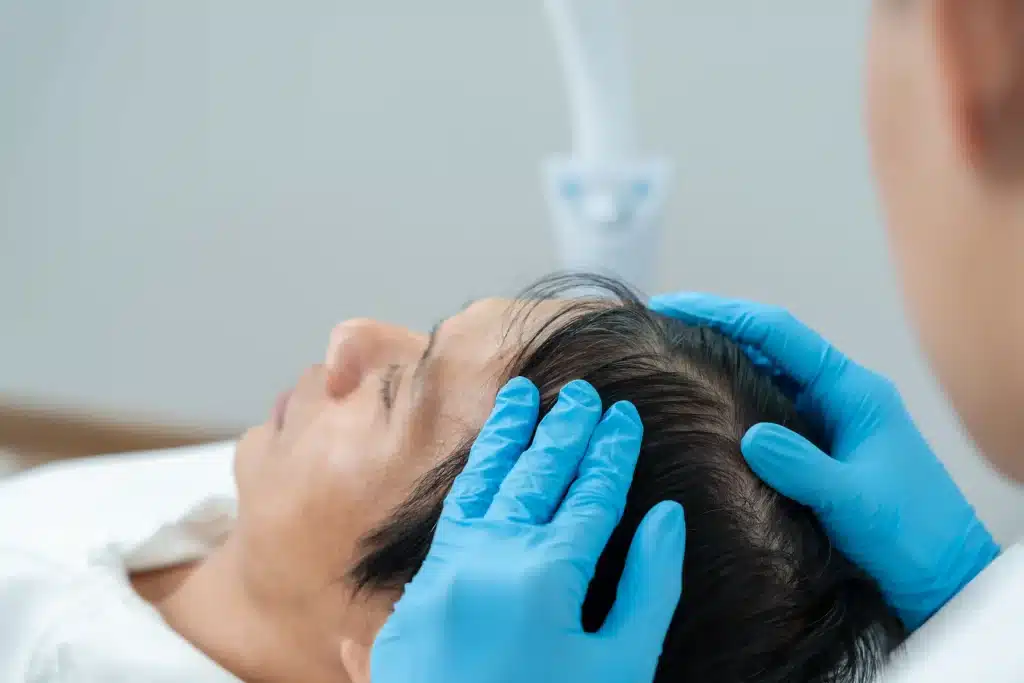
Early scalp and follicle assessments are designed to catch what’s happening beneath your scalp’s surface before it becomes harder to address. This typically includes a look into your scalp’s condition, follicle density, miniaturisation patterns, and may sometimes include a blood test to assess your hormone levels.
If you’re in Singapore and looking for a hair growth specialist, TrichoLab offers personalised scalp assessments. Book a consultation with us to find out more.
Hair Loss Prevention Treatment
- Topical and oral medications
When it comes to medicated options, minoxidil is one of the most well-researched treatments available for both men and women. It comes in a topical solution or low-dose oral tablet and works by prolonging the hair growth phase and improving blood flow to the scalp.For men with androgenetic alopecia, DHT blockers like finasteride and dutasteride are highly effective at slowing hormonal damage to the follicles. Women with hormonal hair loss may benefit from topical anti-androgens, which offer a more targeted approach with fewer side effects. - Professional treatments
TrichoLab’s Signature Medical Microneedling Hair Growth treatment with IYASHI Exosomes is a medically-backed hair growth treatment that utilises ultra-fine microneedles to deliver IYASHI exosomes directly to the hair follicles. Patented in Japan, IYASHI exosomes are a highly purified bioactive synthetic exosome formulation. They consist of exosomes, growth factors, cytokines and chemokines that help reduce hair loss and improve the scalp’s condition.Another notable treatment is the Hair Loss Control Treatment, which utilises LDM ultrasound technology and Saw Palmetto to address DHT-related hair loss. This non-invasive procedure helps reactivate dormant hair follicles with extended growth phases and improves oxygen and nutrient delivery for stronger hair roots.
Long-Term Maintenance Therapy
The truth is that hair loss treatments are an ongoing commitment more than a one-time fix. We can think of it like skincare, where one facial cannot give you lasting results and the benefits come from consistency over time.
Regular treatment sessions with a hair growth specialist in Singapore can improve your follicle health and give your hair the best possible environment to grow and thrive long-term.
Book a Personalised Hair and Scalp Assessment at TrichoLab
When it comes to tackling hair loss, two things matter more than anything else: how early you start and how consistent you are. The first step starts with understanding your individual scalp condition and what it needs to thrive. Schedule an appointment with us for a detailed scalp assessment and personalised treatment plan.